
Elite Property Maintenance LLC • Oklahoma City & Yukon
Furnace Troubleshooting Center Why is my furnace not working?
Find your symptom, learn what it could mean and understand when to call a professional. Built for homeowners facing Oklahoma winter heating problems.
Book Furnace DiagnosisSafety comes first
Gas odor, smoke or carbon monoxide alarm?
Leave the building immediately. Call emergency services or the gas utility from a safe location. Do not operate switches, attempt repairs or re-enter until cleared. Never bypass a furnace safety control.
Find your furnace problem
Furnace blowing cold air+
Check HEAT mode, setpoint and fan AUTO. If cold air persists during a heat call, ignition, airflow or safety shutdown may be involved.
Related service: Furnace repair · Thermostat service
Read the full guide: Cold air from vents
Furnace won’t turn on+
Check thermostat display, batteries if applicable and accessible furnace power switch. Do not repeatedly reset breakers or equipment.
Related service: Furnace repair · Thermostat service
Furnace starts then shuts off+
A dirty filter, restricted coil, flame proving fault or limit trip can interrupt operation. Check the accessible filter with equipment off; recurring shutdown needs testing.
Related service: Furnace repair · Airflow and ductwork
Read the full guide: Furnace keeps shutting off · Flame sensor problems · High limit switch problems
Furnace won’t ignite+
Record any visible error code without removing panels. Draft, ignition, fuel supply and safety controls must be evaluated by a technician.
Related service: Furnace repair
Read the full guide: Furnace won’t ignite
Furnace leaking water+
High-efficiency furnaces produce condensate. Drain restrictions or gasket issues can cause leaks. Shut off equipment if water threatens electrical components.
Related service: Furnace repair
Read the full guide: Furnace leaking water
Furnace flashing error codes+
Record the exact pattern and model number. Codes are manufacturer-specific; do not clear the code before recording it.
Related service: Furnace repair
Read the full guide: Error codes and flashing lights
Furnace making loud noises+
Grinding, banging or scraping may indicate mechanical or combustion issues. Stop operation if noise is severe and arrange inspection.
Related service: Furnace repair
Furnace not keeping house warm+
Check accessible filter and open supply registers. Heat loss, restricted airflow, capacity or equipment faults may contribute.
Related service: Airflow and ductwork · Furnace repair
Thermostat screen blank+
Check replaceable batteries if applicable. Loss of control power or an open safety circuit may be involved.
Related service: Thermostat service
Emergency heat not working+
Record thermostat model and settings. Backup heat configuration, wiring or equipment faults need diagnosis.
Related service: Heat pump service · Thermostat service
Burning smell or gas odor+
For gas odor, smoke or a CO alarm, evacuate immediately and call emergency services or the gas utility from outside. Do not operate switches.
Related service: Emergency heating service after the hazard is cleared
Heating bill unusually high+
Compare usage and weather, not only the bill total. Check schedules and filters; equipment efficiency, heat loss and backup heat may contribute.
Related service: Furnace tune-up · Airflow and ductwork
What you can safely check
Thermostat: confirm HEAT mode and setpoint.
Filter: inspect accessible filter with equipment off.
Registers: ensure supply and return openings are unobstructed.
Power: check accessible service switch; never open energized panels.
Error code: record the model and visible diagnostic pattern.
Stop: if a fault repeats, arrange professional diagnosis.
Understand the components inside your furnace
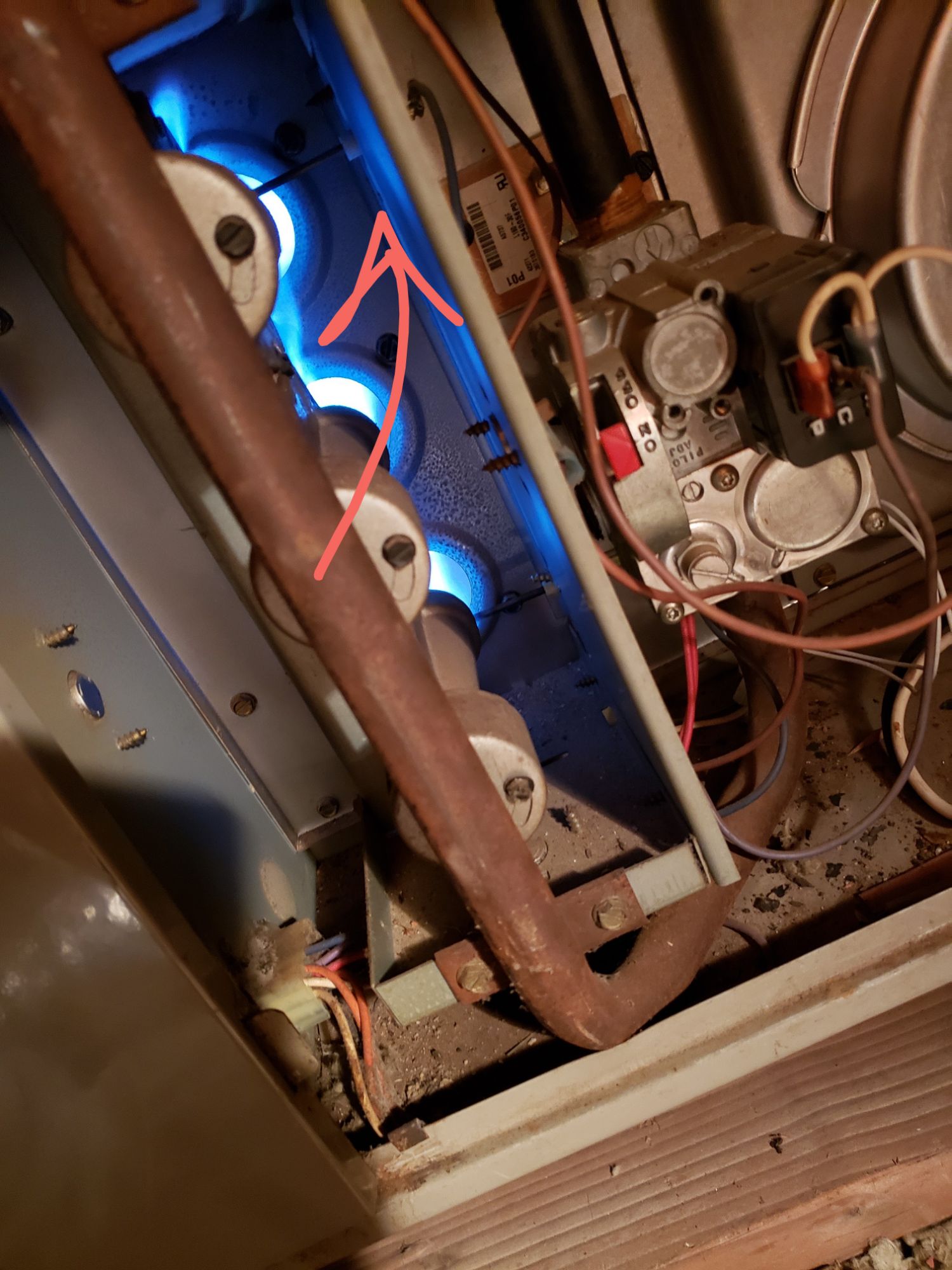 Flame sensor
From $129
Tap photo for details +
What it does: Proves that the burners are lit so the control board can keep the gas valve open.
Signs of trouble: Burners light briefly and shut off; repeated ignition attempts or flame-sensing lockout.
How we diagnose it: We check flame signal against manufacturer specifications, grounding, wiring and burner flame quality.
How we repair it: Clean deposits when appropriate; replace a damaged or failed sensor and verify stable flame signal.
Starting cost: $129
 Igniter
From $129
Tap photo for details +
What it does: Lights the gas using a hot surface or spark, depending on the furnace.
Signs of trouble: Inducer runs but burners never light; ignition lockout.
How we diagnose it: We verify the ignition sequence, power supply and igniter condition against equipment specifications.
How we repair it: Replace a failed igniter with a compatible part and verify ignition and safe operation.
Starting cost: $129
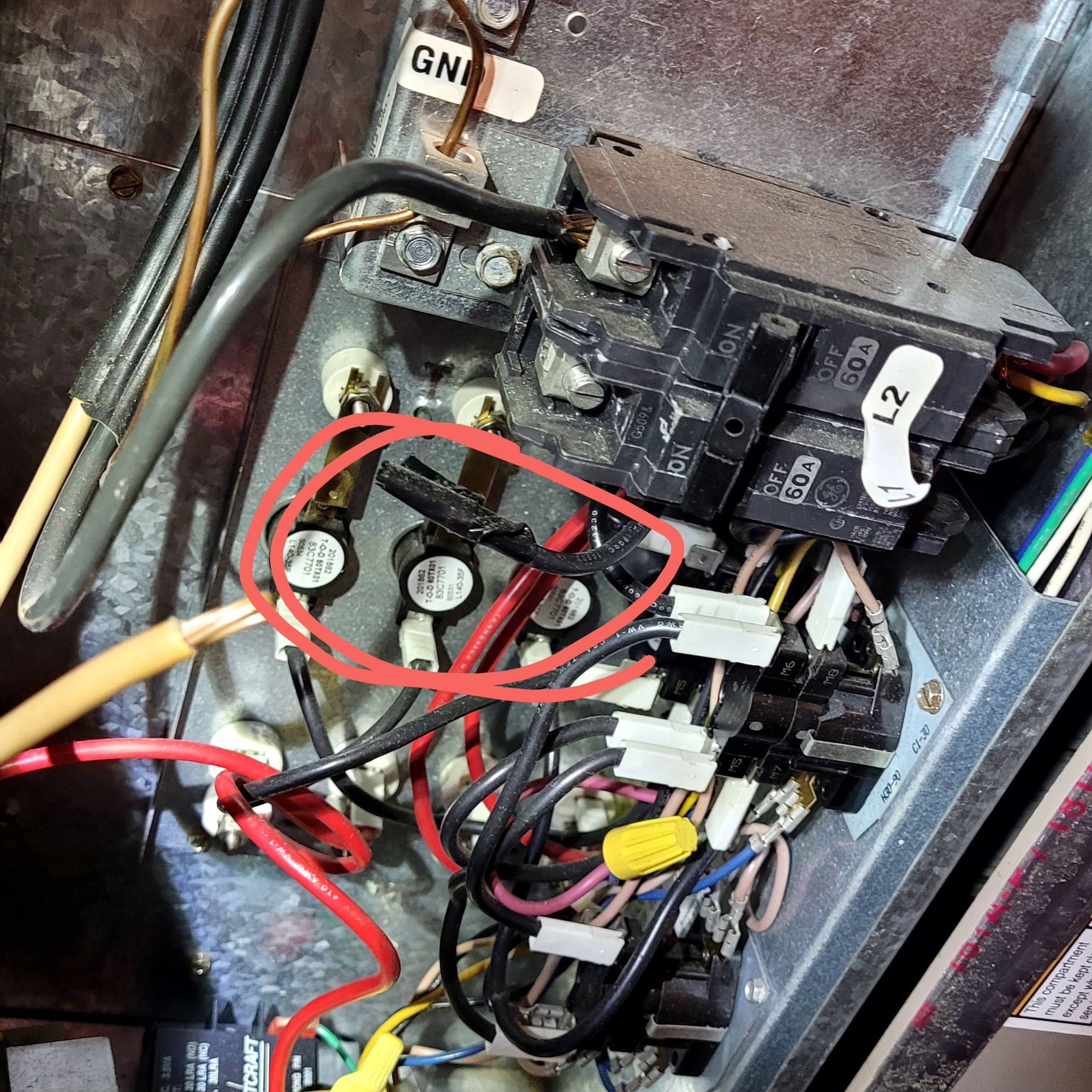 Limit switch
From $129
Tap photo for details +
What it does: Protects the furnace from unsafe temperatures. Types include primary high limits, auxiliary limits, fan-limit controls and flame rollout switches; they have different functions.
Signs of trouble: Burners shut off prematurely, blower continues running, or a limit fault appears.
How we diagnose it: We identify the exact switch and investigate airflow, filter, coil, blower, temperature rise and combustion as applicable. A tripped switch does not prove it is defective.
How we repair it: Correct the underlying cause and replace a confirmed defective switch with the correct rated part. Rollout requires combustion and venting evaluation before return to service; never bypass a safety.
Starting cost: $129
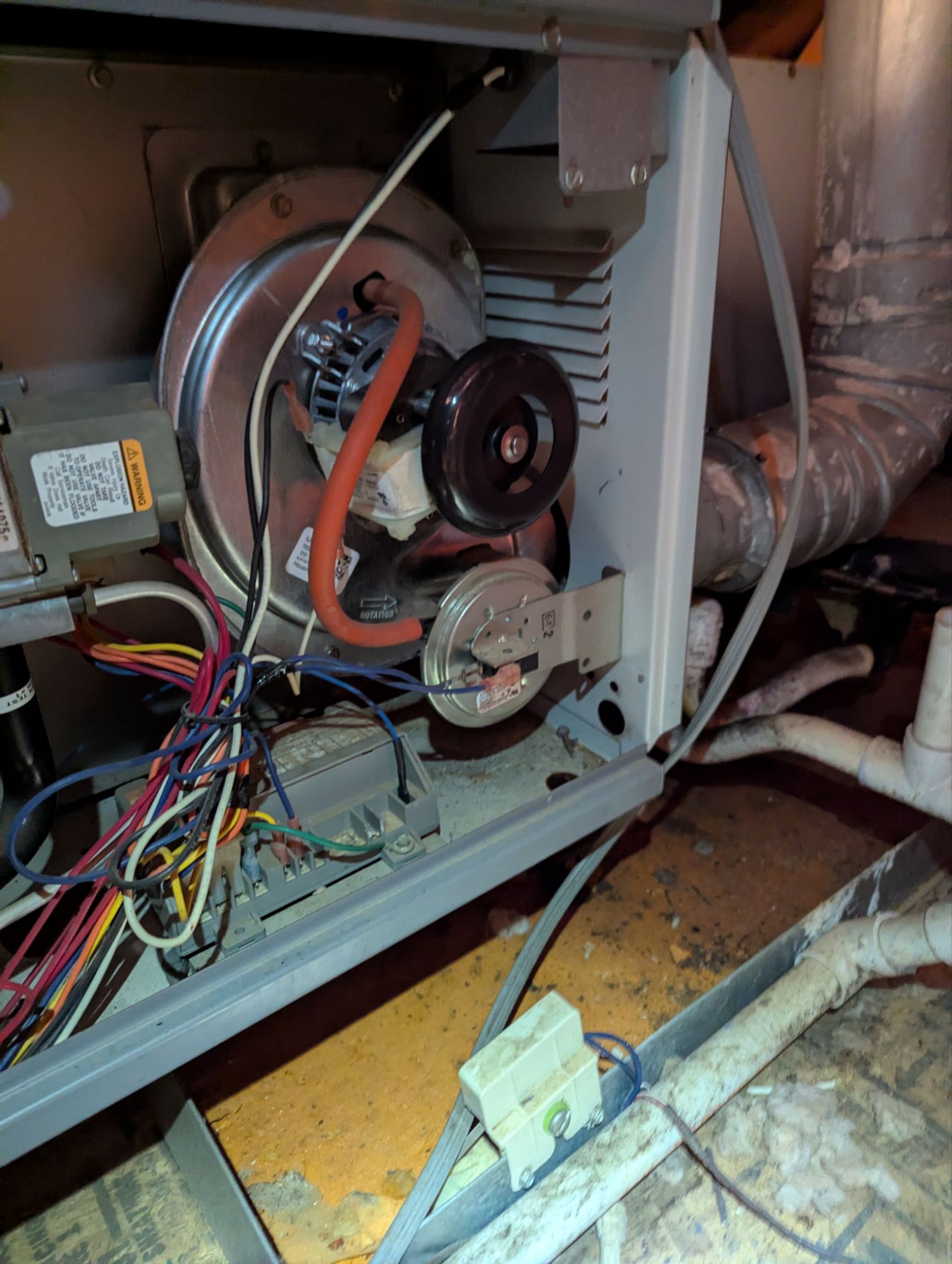 Inducer motor
From $299
Tap photo for details +
What it does: Establishes combustion draft before ignition.
Signs of trouble: Grinding, humming, failure to start or pressure-switch faults.
How we diagnose it: We check the motor, electrical supply, draft, venting and condensate drainage to distinguish motor failure from restrictions.
How we repair it: Correct drainage or venting faults as needed; replace a failed inducer assembly and verify draft and ignition.
Starting cost: $299
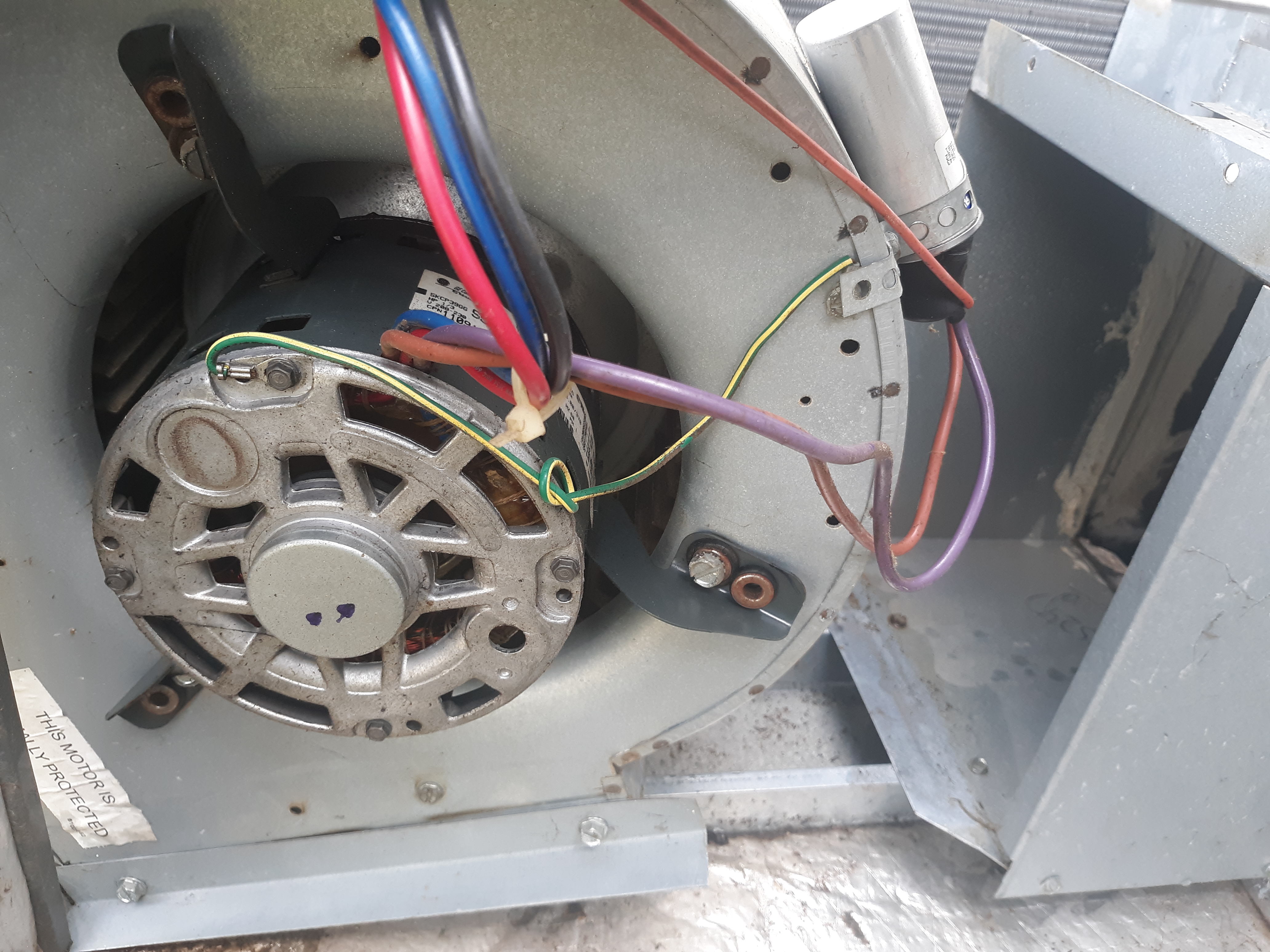 Blower motor
From $299
Tap photo for details +
What it does: Moves heated air through the ducts.
Signs of trouble: Weak or absent airflow, overheating, unusual noise or intermittent operation.
How we diagnose it: We evaluate airflow, motor supply and controls, wheel condition and capacitor or ECM operation as applicable.
How we repair it: Correct airflow restrictions or replace the failed motor or module with compatible equipment and verify airflow and temperature rise.
Starting cost: $299
 Control board
From $299
Tap photo for details +
What it does: Coordinates thermostat calls, ignition, safety inputs and blower operation.
Signs of trouble: Intermittent operation, incorrect sequencing or unexplained lockouts.
How we diagnose it: We verify power, thermostat signals, safety inputs, wiring and board outputs before condemning the board.
How we repair it: Replace a confirmed failed board, configure it to manufacturer requirements and test the full operating sequence.
Starting cost: $299
 Heat exchanger
From $499
Tap photo for details +
What it does: Transfers combustion heat to indoor air while separating combustion gases.
Signs of trouble: Visible deterioration, abnormal combustion or safety concerns; symptoms alone cannot confirm a crack.
How we diagnose it: We inspect accessible surfaces and use manufacturer-approved diagnostic methods and combustion evaluation as appropriate.
How we repair it: Unsafe equipment must remain off. A failed exchanger requires approved replacement or furnace replacement, not patching a crack. Final scope and warranty coverage determine cost.
Starting cost: $499
 Gas valve
From $299
Tap photo for details +
What it does: Controls gas flow to the burners during the ignition sequence.
Signs of trouble: Burners fail to light or remain lit despite a proper ignition sequence.
How we diagnose it: We verify gas supply, control signal, safety sequence and gas pressure using appropriate instruments.
How we repair it: Replace a confirmed defective valve with a compatible approved part; verify leak tightness, gas pressure, combustion and safety operation.
Starting cost: $299
Component symptoms overlap. A qualified diagnosis is needed before replacing parts.
What real furnace service calls teach us
Dirty filter lockout
A severely restricted filter contributed to overheating and shutdown. The furnace resumed operation after the fault was addressed and controls reset by the technician.
Multiple faults
A dirty flame sensor, sensitive limit switch and heavily dirty evaporator coil were identified on one call. Addressing multiple faults restored operation.
Water in inducer housing
A gasket seating problem allowed water into an inducer housing. Water removal and gasket correction restored operation at the visit.
Intermittent control board
An intermittent harness connection was identified. Board replacement was recommended; temporary restoration was not a permanent repair.
These anonymized Elite service cases illustrate why similar symptoms can have different causes.
Frequently asked furnace troubleshooting questions
Can a dirty filter shut down a furnace?+
Yes. Restricted airflow can contribute to overheating and a safety shutdown.
Can I reset a furnace repeatedly?+
No. Repeated shutdown requires diagnosis; do not bypass or repeatedly reset safety devices.
Why does the blower run after the burners stop?+
A normal cooldown or safety response may keep the blower running. Persistent abnormal behavior needs testing.
Is a flashing light always a fault?+
No. Some lights indicate normal operation. Consult the exact model documentation.
Does a flame sensor fault mean the sensor is bad?+
No. Grounding, wiring, burner flame and control issues may also affect flame proving.
Does a pressure switch code mean the switch failed?+
No. Draft, venting, condensate and inducer problems can prevent the switch from proving.
Can a dirty evaporator coil affect heating?+
Yes, if the coil restricts airflow through a shared furnace and cooling system.
What is a high-limit switch?+
A safety control that responds to excessive temperature. A trip requires investigation of the underlying cause.
Can a thermostat cause no heat?+
Yes, but equipment faults can produce the same symptom.
Why does my heat pump feel cooler than a gas furnace?+
Heat pumps may deliver lower supply temperatures while still heating normally.
Is frost on a heat pump normal?+
Some frost is normal; persistent heavy ice may indicate a problem.
Why is one room colder?+
Air distribution, insulation, heat loss and system capacity may contribute.
Should I close vents in unused rooms?+
Closing many vents can increase system resistance; seek airflow advice.
Can I clean a flame sensor myself?+
Gas furnace internal service should be performed by a qualified technician.
What if the furnace is leaking near wiring?+
Stop operation safely and arrange professional service.
Can I diagnose a cracked heat exchanger by smell?+
No. Symptoms alone cannot establish a crack; professional evaluation is required.
How much is a diagnostic?+
Elite charges $85 regular or $125 after hours.
Do I need a new furnace?+
Not necessarily. Consider diagnosis, safety, age, condition and repair cost.
What information helps the technician?+
Model, symptom, visible code, when it began and recent maintenance.
Do you offer emergency service?+
Call 405-921-7032 to confirm availability.
Can maintenance prevent every failure?+
No, but it may identify developing problems.
Where do you serve?+
Oklahoma City, Yukon and surrounding metro communities, subject to coverage.
ELITE HOMEOWNER RESOURCE LIBRARY
In-depth furnace troubleshooting articles
Explore our seven educational guides for common Oklahoma winter heating problems. Each includes practical checks, professional diagnostic context and real service experience.
Cold air from vents
Check thermostat settings, ignition and airflow.
Read the full guideFurnace keeps shutting off
Understand short cycling and safety shutdowns.
Read the full guideFurnace won’t ignite
Learn how the ignition sequence can fail.
Read the full guideFlame sensor problems
Understand flame proving and burner shutdowns.
Read the full guideHigh limit switch problems
Learn why overheating can interrupt heating.
Read the full guideError codes and flashing lights
Record and interpret model-specific diagnostic clues.
Read the full guideFurnace leaking water
Understand condensate and potential leak sources.
Read the full guideStill not getting heat?
Get the underlying problem diagnosed before paying for replacement parts.
Book Furnace Diagnosis