
How to Prepare Your Furnace and Home for an Oklahoma Freeze or Ice Storm
When the forecast in Oklahoma City says “hard freeze” or “ice storm,” that’s not the time to find out your furnace won’t start or your pipes are ready to burst.
I’m in and out of homes all over OKC, Moore, Yukon, Edmond, and Mustang every winter, and I see the same preventable damage over and over — frozen pipes, no heat, cracked furnaces, and high emergency bills.
From the field: A clean filter, a simple furnace check, and a few cheap prep steps around your home can be the difference between “we rode the storm out just fine” and “we lost heat, had frozen pipes, and spent thousands on repairs.” Let’s walk through what to do before the temperature crashes.
What an Oklahoma Freeze Really Does to Your Furnace and Home
Our Oklahoma winters are sneaky. We can be in hoodies one day and waking up to ice on everything the next. Those fast swings are hard on both your home and your heating system:
- Your furnace has to run longer and hotter to keep up with the cold.
- Pipes in exterior walls, garages, and crawlspaces start flirting with freezing.
- Drafts around doors, windows, and attic hatches pull warm air right out of the house.
- Power flickers and surges can damage furnace control boards and low-voltage components.
- Heat pumps go into defrost more often and can ice up if they’re already struggling.
| Prepared OKC Home | Unprepared OKC Home |
|---|---|
| Furnace tuned, filter changed, thermostat checked. | Furnace hasn’t been checked in years, dirty filter choking airflow. |
| Pipes insulated, cabinets open, vulnerable faucets dripping. | Pipes in exterior walls sealed up and forgotten until they freeze. |
| Drafts reduced, curtains managed, heat staying where you need it. | Cold air pouring in from gaps, rooms never warming up. |
| Knows the main water shut-off and emergency contacts. | Hunting for valves and phone numbers while water pours or heat is out. |
1. Prep Your Furnace Before the Oklahoma Freeze or Ice Storm
Don’t wait until there’s ice on the trees and the roads are slick to see if your furnace will fire. Here’s what I tell Oklahoma City homeowners to do early:
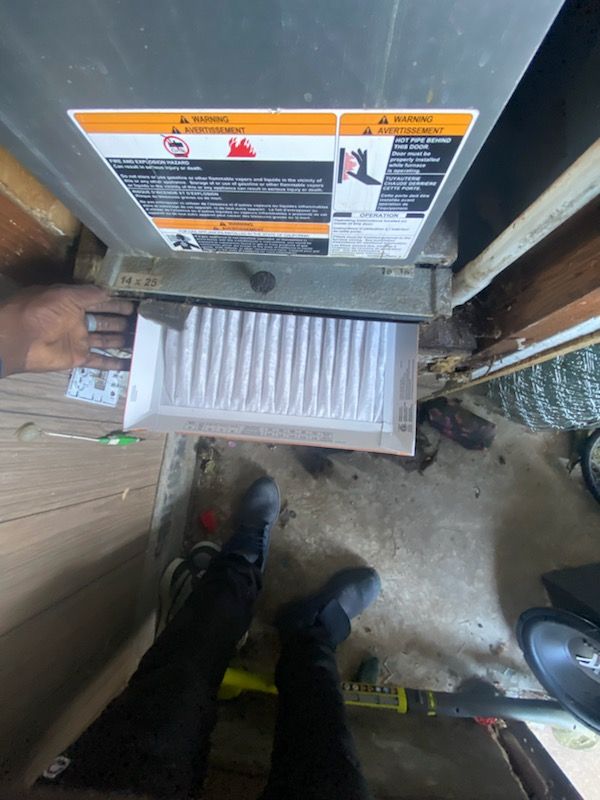
Simple furnace prep steps you can do today:
- Change your filter. If you don’t remember the last time you changed it, it’s overdue. A dirty filter is the #1 thing I see making furnaces struggle in OKC.
- Turn the heat on early. Switch to HEAT and let the system run several full cycles. Listen for unusual noises, rattles, or grinding.
- Smell for issues. A light “burnt dust” smell for the first few minutes is normal. Strong burning, melting, or electrical smells are not — shut it down and call.
- Clear the area around your furnace. Move boxes, paint cans, and stored items away from the unit so it can breathe and be serviced safely.
- Check supply and return vents. Make sure vents and returns aren’t blocked by furniture, rugs, or boxes.
- High-efficiency furnaces: Check PVC intake and exhaust pipes outside and make sure they’re not blocked by leaves, debris, or old wasp nests.
2. Thermostat Settings & Power Protection During a Freeze
Your thermostat is the “brain” of your comfort. When the temperature drops fast in Oklahoma, small mistakes here can mean cold rooms and high bills.

Best thermostat habits for Oklahoma freezes:
- Pick a temperature and hold it. For most OKC homes, 68–72°F works well during a freeze. Avoid constantly bumping it up and down.
- Don’t shut the heat off completely at night. Letting the house get too cold can put pipes in exterior walls and garages at risk.
- Heat pump owners: Make sure your thermostat is on HEAT, not accidentally set to EMERGENCY HEAT unless your tech tells you to. Emergency heat can drive bills way up.
- Check your fan setting. Most homes do best with the fan on AUTO, not ON, especially during long cold snaps.
- Change thermostat batteries. If your thermostat uses batteries, put fresh ones in before winter so it doesn’t fail in the middle of an Oklahoma ice storm.
Power flickers, surges, and your furnace:
- Use surge protection. Ask about whole-home surge protection or at least protect sensitive electronics. Surges can damage furnace control boards and transformers.
- After an outage, give the system a few minutes before turning it back on so compressors and motors aren’t hit while pressure is off-balance.
- Watch for error codes. If your furnace flashes a trouble code after a storm, don’t keep resetting it — that’s your cue to call.
3. Inside-the-Home Freeze Protection: Keep the Heat Where You Need It
Your furnace can be doing its job and still lose the battle if your home is leaking heat. Here’s what I recommend OKC homeowners do inside the house when a hard freeze is coming:

Simple home actions that make a big difference:
- Close doors to truly unused rooms, but keep an eye on rooms with plumbing. You want warm air around pipes.
- Open interior doors to bathrooms, laundry rooms, and kitchens on exterior walls so heat can circulate around water lines.
- Use your curtains wisely. Open them on sunny south-facing windows during the day, close them at night to hold heat in.
- Add draft stoppers at the bottom of leaky exterior doors.
- Seal obvious gaps around windows and the attic hatch with simple weatherstripping or temporary foam strips.
- Know your emergency plan. Make sure everyone in the home knows where the main water shut-off is and who to call if you lose heat.
4. Protecting Pipes, Attics & Crawlspaces from Freezing
When temps drop into the teens and wind chills fall into the single digits, Oklahoma homes can absolutely get frozen pipes — especially in older houses and add-ons.
Pipe and plumbing prep before a freeze:
- Disconnect garden hoses and screw on insulated covers for outdoor spigots.
- Insulate exposed pipes in garages, crawlspaces, and attics with foam sleeves or pipe wrap.
- Open cabinet doors under sinks on exterior walls so warm air from the house can get to the pipes.
- Let vulnerable faucets drip (hot and cold) during the coldest nights to keep water moving.
- Check garage plumbing. Utility sinks and water heaters in garages are extra vulnerable when the garage door is opened frequently.
If a pipe freezes but hasn’t burst yet:
- Turn the faucet on slightly so water can flow when it thaws.
- Use a hair dryer or small space heater (kept a safe distance away) to gently warm the area around the frozen section.
- Never use an open flame or blowtorch on plumbing. You can crack pipes, start a fire, or create dangerous fumes.
5. Heat Pumps & Outdoor Units During Oklahoma Ice Storms
Your outdoor unit takes a beating during sleet, snow, and freezing rain. Whether you have a heat pump or a straight cool AC with a gas furnace, you want that condenser area ready too.
If you have a heat pump:
- Keep snow, ice, and debris cleared away from the sides and top of the unit so it can breathe.
- Expect defrost cycles. It’s normal to see steam and hear different sounds when the unit goes into defrost mode during cold weather.
- Don’t chip ice off the fan blades with tools. You can bend blades and damage the motor.
- If the outdoor unit is a solid block of ice and never seems to clear, it’s time to call for service.
For all outdoor units in Oklahoma:
- Trim weak branches above the unit before winter so ice doesn’t snap limbs onto your equipment.
- Check drainage. Make sure gutters and downspouts aren’t dumping water right onto the unit area where it can freeze.
- Keep kids and pets clear of the outdoor unit during ice storms so nothing gets pulled into the fan.
Quick Oklahoma Freeze & Ice Storm Checklist
Here’s a simple, local-friendly checklist you can run the day before the freeze hits Oklahoma City:
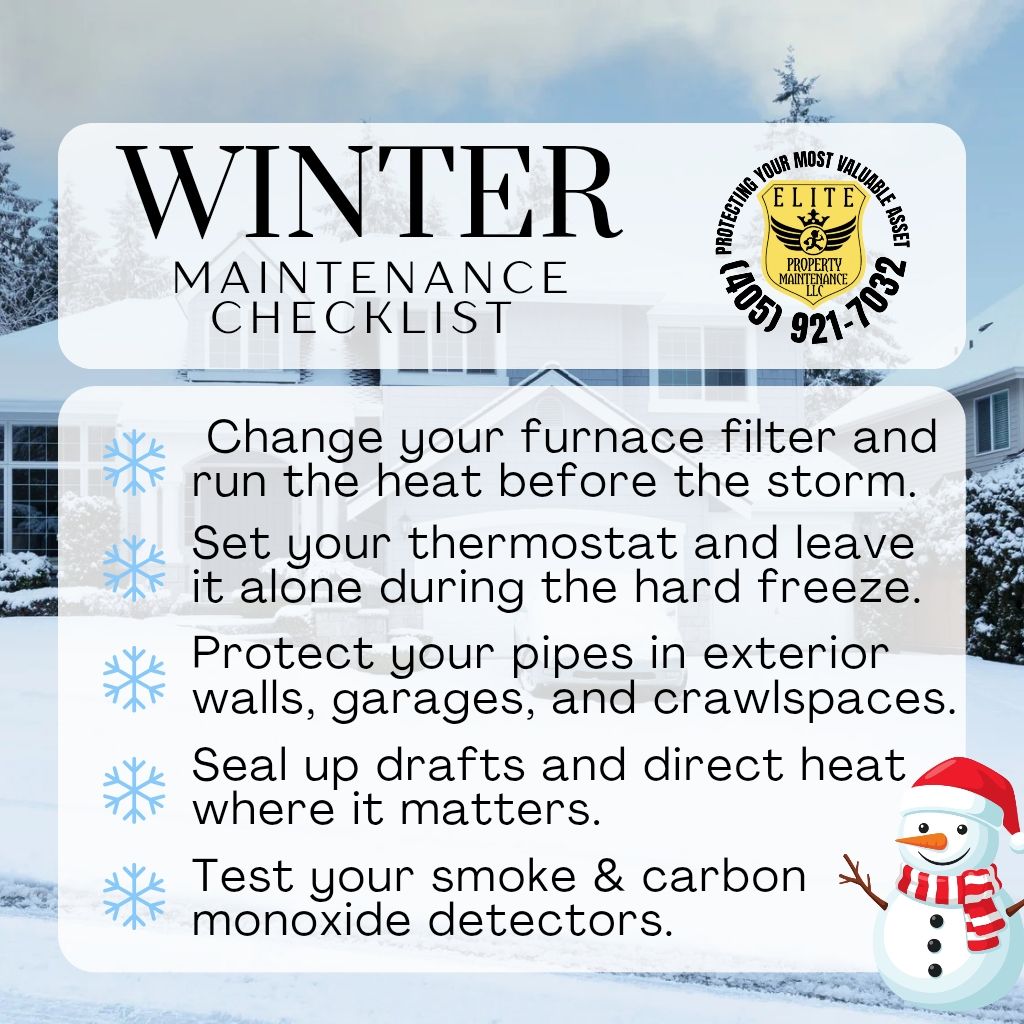
- ✅ Change your furnace filter.
- ✅ Turn on the heat and let it run several full cycles. Listen and smell for anything unusual.
- ✅ Verify thermostat is on HEAT, fan on AUTO, and set in a safe range (around 68–72°F).
- ✅ Open cabinets under sinks on exterior walls; plan which faucets you’ll let drip.
- ✅ Disconnect hoses and cover outdoor spigots.
- ✅ Insulate any exposed pipes in garages, attics, or crawlspaces.
- ✅ Clear space around your furnace, water heater, and outdoor unit.
- ✅ Test smoke detectors and carbon monoxide detectors.
- ✅ Find your main water shut-off and show the whole household where it is.
Video: Freeze Prep from a Local Oklahoma HVAC Tech
In this video, I walk you through real-world steps I use in Oklahoma homes before a freeze or ice storm hits — from filters and furnace checks to simple pipe protection and thermostat settings that can save you from no-heat calls and burst pipes.
Don’t Wait for the Freeze Warning — Get Your System Ready Now.
If you’re in Oklahoma City, Moore, Norman, Edmond, Yukon, Mustang or nearby and you’re not sure your furnace or heat pump is ready, let’s take a look before the ice and wind hit.
FAQ: Oklahoma Freezes, Furnaces & Frozen Pipes
For most homes in the Oklahoma City metro, 68–72°F is a solid range during a hard freeze. The main thing is to pick a temperature and hold it instead of constantly bumping it up and down. Letting the house drop too low at night can put pipes and some rooms at risk.
You don’t have to drip every faucet, but it’s smart to drip the most vulnerable lines: sinks on exterior walls, plumbing in garages, and lines over crawlspaces. A slow drip keeps water moving, which makes it much harder for pipes to freeze and burst.
If possible, schedule your furnace tune-up a week or two before the first major cold front or ice storm. Once the freeze warning hits, every HVAC company in Oklahoma City gets slammed with no-heat calls, and you’ll have fewer options and longer wait times.
Yes. I’ve seen pipes freeze in bathroom walls, kitchen sinks on exterior walls, garages, bonus rooms, and additions, especially in older homes around OKC, Bethany, and Warr Acres. You don’t need a week of sub-zero temps — the right mix of cold, wind, and poor insulation is enough.
Space heaters can help if they’re used safely and your electrical system can handle them. Problems start when people:
- Plug multiple heaters into one power strip or outlet,
- Run them near curtains, bedding, or furniture,
- Leave them running unattended or overnight.
They also use a lot of power. If you rely on space heaters just to stay comfortable, we should look at your main heating system and insulation instead of band-aiding the problem.
Start with simple checks:
- Make sure the thermostat is on HEAT and set above room temperature.
- Check that the furnace switch and breaker are on.
- Inspect the filter — if it’s extremely dirty, replace it.
If it still won’t run, call a pro right away. While you wait, close doors to unused rooms, use safe supplemental heat, and protect pipes by opening cabinets and dripping vulnerable faucets.
Closing one or two vents slightly is usually fine, but slamming a bunch of vents shut can backfire. It raises pressure in the duct system, can make the furnace run hotter than it should, and may create noise and comfort issues in the rest of the home. If you have hot and cold spots, it’s better to have the system and ductwork balanced correctly.
With Oklahoma’s dust, red dirt, and pets, many 1″ filters in OKC-area homes need to be changed every 30 days. Thicker (4–5″) filters can last longer, but you should still check them monthly during heavy use. A clean filter is one of the cheapest ways to protect your furnace and lower your bills.
A properly sized and maintained heat pump can handle most Oklahoma winter days, but during extreme cold snaps and ice events it will rely more on auxiliary or backup heat strips. If your heat pump never seems to warm the house or the outdoor unit never runs, that’s a good time to have us check sizing, charge, and controls — not just crank the thermostat and hope.
Absolutely. When I come out to your home in Oklahoma City or the surrounding metro, we can:
- Inspect and tune up your furnace or heat pump,
- Look at ductwork, airflow, and filter setup,
- Identify your most at-risk pipes, spigots, and rooms,
- Give you a simple, customized plan for future freezes and ice storms.
You don’t have to guess. We’ll walk through it like a real homeowner, not a textbook, and make sure you know what to do before the next freeze warning.